Based in Virginia Beach, Collect911 is a premier debt recovery firm serving the entire Commonwealth—from the government corridors of Northern Virginia to the logistics hubs of Richmond and the maritime coast of Hampton Roads.
Virginia medical collections now have their own rulebook—and timing matters. Before escalating an unpaid patient balance, providers need to know whether the account is still within Virginia’s three-year medical-debt lawsuit window, whether the 120-day restriction on extraordinary collection actions applies, and whether financial assistance changes what the patient actually owes.
Collect911 helps Virginia medical and dental practices separate routine patient A/R from accounts requiring additional compliance review, then match fresher balances to a low-cost fixed-fee approach and harder aged accounts to contingency recovery. The objective is simple: recover valid patient responsibility without turning every overdue account into the same collection process.

Why Virginia Businesses Trust Us:
-
Local Expertise, National Reach: While we are experts in Virginia law, we are fully licensed to collect in all 50 states and Puerto Rico.
-
4.85-Star Reputation: We recover your money without ruining your online reviews. Our diplomatic approach ensures you get paid while preserving your business relationships.
-
No Risk Pricing: Our contingency model means we only get paid when you do.
Serving Virginia’s Unique Economy
Virginia is not just one market. We tailor our strategies to the diverse sectors that drive the state:
-
Northern Virginia (NoVA): Specialized recovery for Government Contractors, Tech Firms, and Property Managers in Fairfax, Tysons, and Loudoun County.
-
Richmond & Central VA: Solutions for Medical Practices, Dental Offices, and Logistics/Trucking companies.
-
Hampton Roads: Debt recovery for Tourism, Maritime Services, and Credit Unions in Virginia Beach and Norfolk.
Our Flexible Pricing Models

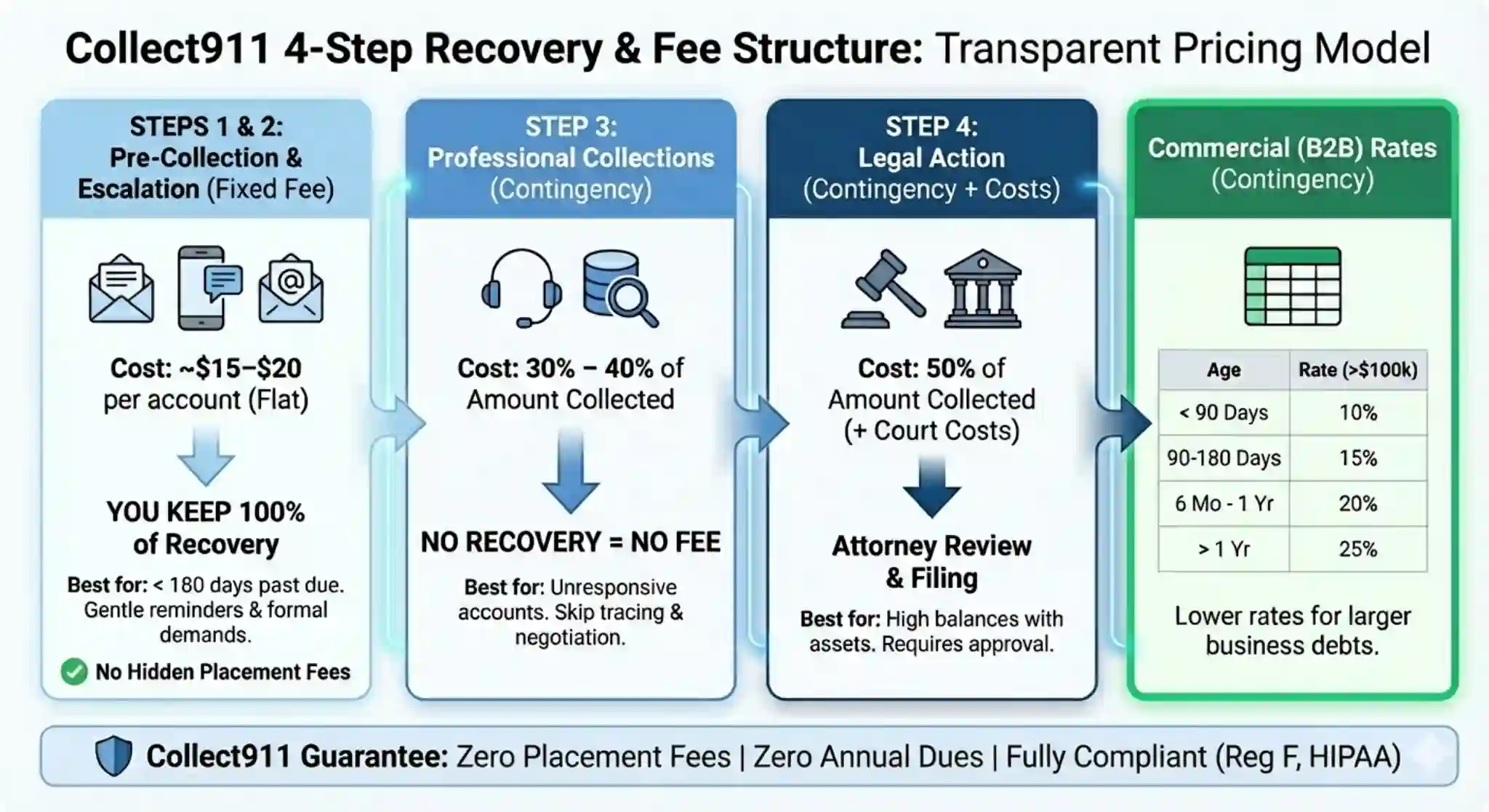
We offer two simple ways to engage our services, designed to fit your budget and the age of your debt:
1. Fixed-Fee Service (Pre-Collect)
-
Best for: Recently overdue accounts (under 90 days).
-
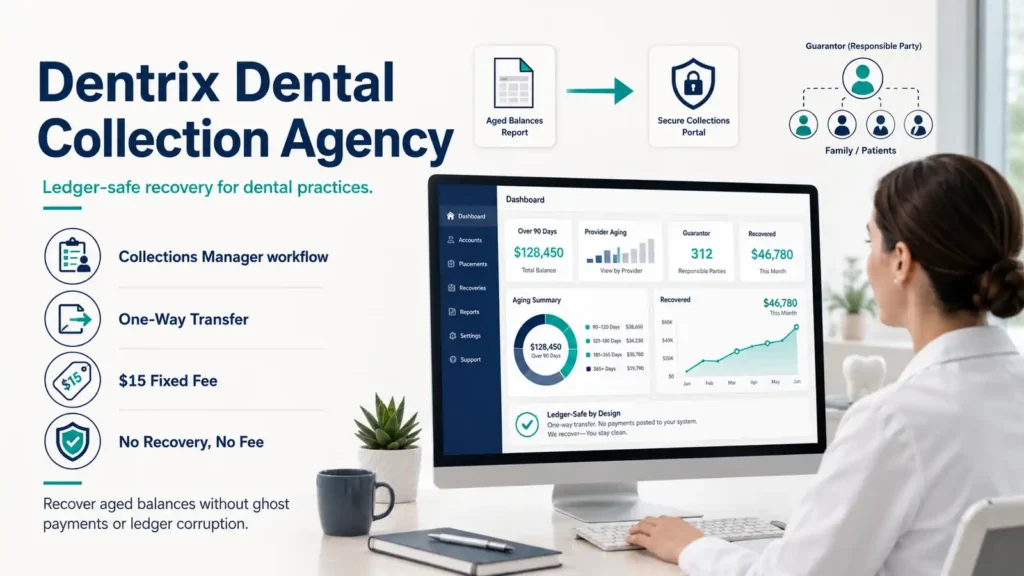
Cost: Low flat fee per account (e.g., $15).
-
Benefit: You keep 100% of the recovered money. It serves as a gentle “nudge” from a third party.
2. Contingency-Based Service
-
Best for: Older debts, judgments, or unresponsive debtors.
-
Cost: A percentage of what we collect.
-
Benefit: No Recovery, No Fee. If we don’t collect, you pay $0.
Our Collection Process
We use a “Diplomacy First” approach that escalates only when necessary:
-
Data Scrubbing: We check for bankruptcy, litigious history, and address changes immediately.
-
Soft Outreach: Professional letters and calls to resolve the oversight gently.
-
Intensive Recovery: Skip-tracing and negotiation by trained specialists.
-
Legal Escalation: If standard efforts fail, we can (with your permission) utilize our network of Virginia attorneys to pursue judgments.
Virginia Collection Laws: What You Need to Know
Virginia has specific statutes that protect both consumers and creditors. We ensure your business stays compliant with the Virginia Fair Debt Collection Practices Act (VFDCPA).
-
Statute of Limitations:
- Virginia generally imposes a three-year lawsuit deadline on medical debt from the final invoice due date, subject to the payment-plan and statutory exceptions
-
Note: Once this period expires, you cannot file a lawsuit, but we can still attempt voluntary collection.
-
Judgments:
-
Valid for 10 years and can be renewed for another 10, giving you a 20-year window to collect.
-
-
Wage Garnishment:
-
Virginia allows garnishment of 25% of disposable earnings or the amount above 40 times the federal or Virginia minimum hourly wage, whichever minimum wage is greater.
-
-
Communication Rules:
-
Strict adherence to “Convenient Time” rules (8 AM – 9 PM) and validation notice requirements (sending the debt validation letter within 5 days of initial contact).
-
Frequently Asked Questions:
Does Virginia’s 120-day medical debt rule mean a provider cannot contact a patient for four months?
No. Virginia’s 120-day rule applies specifically to extraordinary collection actions, not ordinary billing, statements, payment reminders, or compliant attempts to resolve an unpaid balance. Extraordinary collection actions include activities such as selling medical debt, initiating certain legal proceedings, attaching property, or garnishing wages. This allows providers to continue reasonable early-stage patient outreach while reserving stronger collection measures until applicable requirements have been satisfied.
Does Virginia’s 3% interest cap apply to every doctor and dental office?
Not necessarily. Virginia’s Medical Debt Protection Act specifically restricts large healthcare facilities and medical debt buyers from charging interest or late fees during the first 90 days after the final invoice is due, and thereafter limits those charges to 3% per year. A “large healthcare facility” includes Virginia hospitals and their outpatient facilities, as well as healthcare practices with at least $20 million in annual revenue. Smaller independent practices should determine which provisions apply to their specific organization before adding interest or late fees.
Can a Virginia healthcare provider sell unpaid medical debt to a debt buyer?
Yes, but Virginia now places significant conditions on the sale. Before selling medical debt, the creditor must enter into a legally binding written agreement restricting the buyer’s collection practices. Among other things, the agreement must limit interest to no more than 3% annually and allow the account to be returned or recalled when the patient is determined to qualify for applicable financial assistance. Importantly, the original medical creditor can remain liable for the debt buyer’s actions relating to the account.
What happens if a Virginia patient qualifies for financial assistance after collections have started?
Financial-assistance eligibility can change the collectible balance and available recovery methods. Virginia prohibits wage garnishment of a patient who qualifies for financial assistance applicable to the medical debt. When debt has been sold under the Medical Debt Protection Act, the required agreement must also make the account returnable or recallable when financial-assistance eligibility is established. If a patient has overpaid after applicable assistance is calculated, covered entities must refund the excess within 60 days after determining the overpayment.
Can a Virginia medical collection agency report an unpaid patient balance to the credit bureaus?
No. Virginia separately prohibits healthcare providers and collection entities from reporting medical debt to consumer reporting agencies. The prohibition applies not only to hospitals but also to licensed healthcare professionals, medical facilities, EMS agencies, and collection entities attempting to collect medical debt. Virginia medical collections therefore need to rely on compliant communication and recovery strategies rather than consumer medical-debt credit reporting.
When does Virginia’s three-year deadline for suing over medical debt actually start?
For most covered medical debt, Virginia bars a collection lawsuit if it is not filed within three years from the due date of the final invoice for the healthcare service. A payment plan can change that timeline when the agreement allows a longer collection period. If the patient later breaches that payment plan, the lawsuit generally must be filed within three years from the date of the breach. Virginia’s medical-debt limitation provision does not apply to medical debt arising from services paid for under programs administered by the Department of Medical Assistance Services.
Take the Next Step
Don’t let unpaid invoices impact your payroll or growth. Partner with a Virginia-based agency that understands your local market.